Winter is coming! Most natural food is gone by now, but birds still have to keep their fat reserves up to survive the cold. A small bird can use up much of the fat it stored during the day in a single freezing night. That’s where your garden comes in. Feeding birds in winter makes a real difference, as long as the feeder is kept clean. A dirty one just passes disease from bird to bird.
What to feed birds in winter is simpler than the garden centre shelves make it look. Suet, fat balls and mealworms are the best winter bird food because they’re high in energy. Then seeds, best seeds are sunflower hearts for a seed feeder, since they’re rich in oil and protein. Nyjer seed is so small that it needs a specially designed feeder else it just pours out. Peanuts attract tits, finches, nuthatches and woodpeckers, but only put them out in a feeder made of rigid steel mesh. Overripe apples are worth saving, too. Scatter them on the ground and the thrushes and blackbirds will find them. Raisins and sultanas are fine in gardens without pets. If you have a cat or a dog, skip them, since they’re toxic to both.
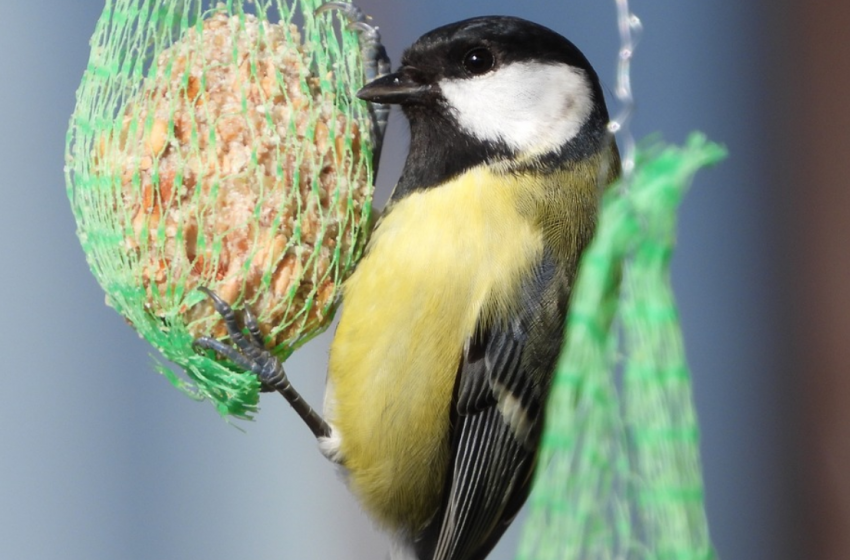
Many fat balls and seed cakes reach the shop in bird food nets. The nets are open polyethylene mesh that stretches to fit balls of different sizes, closed with a clip or tape that also forms a loop for hanging. You can see the food through the mesh, and several balls stay together on the shelf and in transport. Good packaging, then. Just not something to hang in a tree (more on that below).
Don’t put out more than gets eaten. Little and often works better, and after a week or two you’ll know roughly how much your birds go through. Uneaten food is the thing to avoid. Fat balls for birds and other suet products can stay out for up to seven days. Seeds and peanuts should all be eaten within one to two days. Mealworms are the strict one: eaten or cleared away by dusk the same day, so hedgehogs don’t get them at night. And keep everything as dry as possible.
Choose hanging feeders. I know bird tables look nice, but disease spreads more easily on flat surfaces, so it’s time to retire them along with any other flat feeders. Keep feeders away from where birds roost (under trees is the usual problem) and move them to a new spot every week so old food doesn’t build up beneath them.
Then the boring bit. Once a week, put gloves on and wash the feeders in hot soapy water with a non-toxic disinfectant, rinse them and leave them to dry completely before you refill. If a sick bird turns up, stop feeding and clean everything thoroughly before you start again. Water gets forgotten more than food does. Replace it every day, clean the bath weekly, and in frost, break the ice so birds can still drink.
Back to those nets, plastic nets around fat balls must be removed, because birds such as woodpeckers can get caught up in the mesh. Take the ball out of its net before it goes outside, put it in a wire cage feeder, and throw the net away with household waste or plastic recycling, depending on local rules.